

Navigating the Commercial Real Estate Market in Memphis
Navigating the commercial real estate market in Memphis takes more than scrolling listing sites on a Tuesday afternoon. This guide breaks down how the market is structured, how deals actually come together, what drives pricing, and how to decide between leasing and buying.
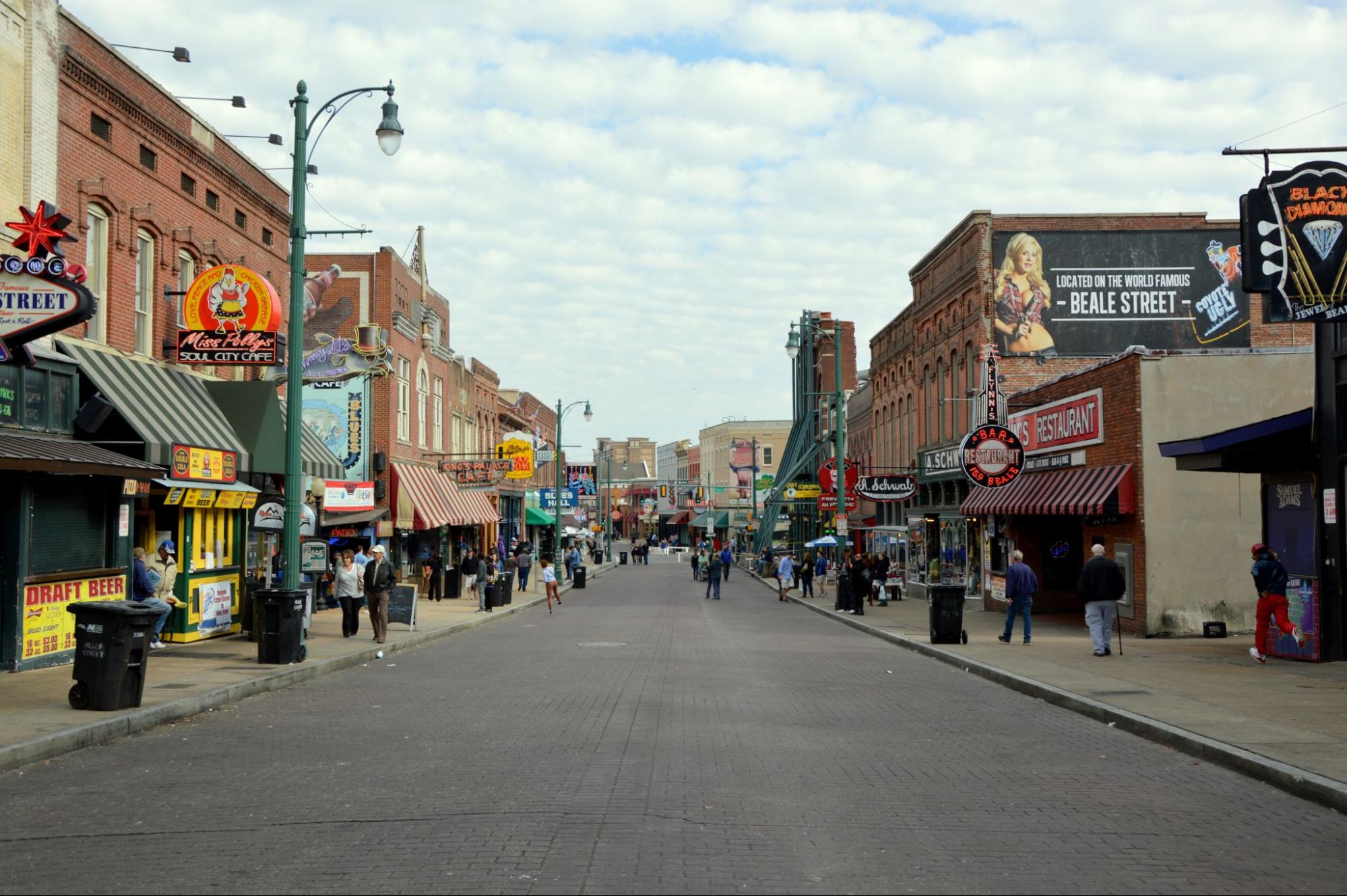
What Is the Memphis Commercial Real Estate Market?
The Memphis commercial real estate market is the full collection of income-producing property leased and traded across five segments: office, industrial, retail, multifamily, and raw land. Each segment carries its own pricing, tenant profile, and demand drivers, and industrial distribution space drives more local activity here than in comparable metros.
Logistics is the reason. The metro sits at the intersection of river, rail, interstate, and air freight, pulling distribution and third-party logistics users into the market at a pace that shapes industrial absorption beyond what population alone would predict. When a national operator needs 400,000 square feet with 32-foot clear height and dock doors on two sides, this is one of the first markets on the list.
Activity concentrates in a handful of submarkets: Downtown, Midtown, and East Memphis carry most office and infill retail demand, while outer-loop corridors near the interstates and the airport absorb large-format industrial development.
Four numbers describe market health at any given moment:
- Vacancy rate: the share of available space sitting empty
- Net absorption: square footage occupied minus square footage vacated
- Asking rent: quoted rent per square foot, per year
- Cap rates: the yield investors accept on stabilized income
Locally, industrial vacancy stood near 10% as of June 2026, down 250 basis points year-over-year, with the market absorbing more than 5.1 million square feet in 2025 alone. Tenants, landlords, buyers, developers, and investors all read those same numbers differently, which is exactly why representation matters.
How the Commercial Real Estate Process Works, Step by Step
A commercial real estate deal moves through five stages: defining requirements, surveying the market, touring and submitting a letter of intent, completing due diligence, and negotiating the lease or purchase agreement through closing. Most leases take 60 to 120 days start to finish. Acquisitions usually run 90 to 180 days.
How do you define your requirements?
Nail down use type, square footage, budget, timeline, and growth assumptions before anyone tours a building. A retailer planning three more locations needs a different lease term than one holding steady, and that assumption changes which spaces even make the shortlist.
How do you shortlist the right submarkets?
Our team builds a survey of available and pre-marketed options, then narrows by the factors that actually move your business: highway access, labor availability, customer proximity, and delivery logistics.
When should you tour and submit a letter of intent?
Tours confirm what floor plans can’t. The letter of intent (LOI) follows, outlining rent, term, tenant improvement allowance, and options for a lease, or purchase price and closing timeline for a sale. The LOI isn’t binding, but it sets the frame for everything after it.
What does due diligence cover?
This is where deals get saved or killed. Due diligence typically covers:
- Title review and survey
- Zoning verification and permitted use confirmation
- Phase I environmental site assessment
- Building condition and roof, HVAC, and structural review
- Existing lease and estoppel review on investment sales
What happens during negotiation, financing, and closing?
Attorneys paper the lease or purchase agreement, lenders finalize terms, and you either close or take occupancy. Coordination is the whole game here. One late survey can push a closing by three weeks.

Benefits of Working With Commercial Real Estate Representation
Representation changes what you see and what you pay. Public platforms show a fraction of what’s available, and asking rent is rarely the rent that gets signed.
Here’s what representation puts on your side of the table:
- Off-market and pre-marketed access. Plenty of quality space trades before a sign goes up, through relationships rather than listings.
- Real comparable data. Recent lease and sale comps let you benchmark asking rents, concessions, and pricing instead of guessing.
- Negotiated economics beyond base rent. Tenant improvement allowances, free rent periods, renewal options, expansion rights, and caps on common area maintenance (CAM) often outweigh a few cents per square foot.
- One coordinated timeline. Attorneys, lenders, architects, and inspectors get managed together so due diligence deadlines don’t sneak up on you.
- Landlord and owner support. Positioning, marketing, and tenant credit screening protect long-term asset value.
- Fewer expensive surprises. Zoning conflicts, use restrictions, and uncapped operating expense exposure are the mistakes that cost the most and get caught the earliest.
The broker team at Jones Aur brings seasoned backgrounds and an insider network to that work, backed by 50+ years of combined experience, $600M in closed transactions, and 1,000+ completed transactions across leasing, sales, and asset management. The firm is also part of the X-Team Retail Advisors network, extending local reach into retail markets nationwide. You’ll enjoy the same power you’d find with the real estate behemoths, but with service tailored to your needs. When you work with Jones Aur, you’re not just another number.
Leasing vs. Buying Commercial Property: Which Fits Your Plan?
Leasing preserves capital and flexibility. Buying builds equity and control. The right answer depends on how confident you are in your five-year plan.
| Factor | Leasing | Buying |
|---|---|---|
| Upfront capital | Security deposit and moving costs | Down payment, closing costs, reserves |
| Flexibility | High, exit at lease end | Lower, tied to sale or sublease market |
| Control of space | Limited by landlord approval | Full control of use and improvements |
| Balance sheet impact | Lease liability, no asset | Asset plus mortgage debt |
| Exit options | Assignment, sublease, expiration | Sale, refinance, lease to a tenant |
| Best horizon | Under 7 years | 7+ years |
Leasing makes sense when headcount is uncertain, when you’re testing a trade area, or when working capital is better spent on inventory and people than on a down payment. Buying makes sense when operations are stable, when the space is genuinely mission-critical, and when equity buildup or tax basis matters to your long-term plan.
Two middle-ground structures deserve a look. A sale-leaseback lets an owner-occupier pull equity out of a building while staying in it under a long-term lease. A build-to-suit gives you purpose-built space, funded by a developer, in exchange for a longer term commitment.
Lease structures matter as much as the decision itself:
- Triple net (NNN): you pay base rent plus property taxes, insurance, and maintenance
- Modified gross: you and the landlord split operating expenses by a negotiated formula
- Full service: one rent number covers most operating costs, common in multi-tenant office
What Drives Commercial Real Estate Costs in This Market
Commercial real estate costs come down to six main drivers: submarket location, building class and condition, operating expense structure, tenant improvement scope, lease type, and financing terms. Together those six factors explain most of the gap between the rate quoted in a flyer and what a space actually costs your business every year.
Commercial pricing gets quoted two ways. Leases are quoted in dollars per square foot per year, sometimes per month for retail. Sales are quoted in dollars per square foot or by capitalization rate, which divides net operating income by price. Location, building specs, operating expenses, buildout, and financing terms then push your actual cost up or down from the quote.
| Cost driver | What moves the number |
|---|---|
| Submarket | Infill Memphis locations command premiums over suburban and outer-loop sites |
| Building class | Class A commands more than B or C for the same square footage |
| Industrial specs | Clear height, dock doors, trailer parking, and column spacing |
| Operating expenses | CAM, property taxes, insurance, and how utilities are metered |
| Tenant improvements | Scope, current construction costs, and who funds the work |
| Financing | Interest rate, loan-to-value, and debt service coverage requirements |
A few of these deserve extra attention. Operating expenses on a triple net lease are yours to absorb, so a low base rent with uncapped CAM can cost more than a higher gross rate. Construction pricing swings, and a tenant improvement allowance that covered a full buildout three years ago may cover framing today. On the purchase side, debt service coverage requirements set by lenders often dictate your maximum price more than the appraisal does.
Who Should Be Actively Evaluating Commercial Space Now
Timing decides your negotiating position. The tenants and owners who get the best terms start early, when they still have options.
Start looking if you recognize yourself here:
- You’re 12 to 18 months from lease expiration. This is your strongest position, early enough to credibly consider relocating, late enough for landlords to take you seriously.
- You’ve outgrown your square footage or need different loading, clear height, or power specs than your current building offers.
- You own an underperforming asset and want a repositioning plan or a disposition analysis before another year of soft occupancy.
- You’re an investor hunting stabilized income or value-add plays across retail, office, industrial, or multifamily.
- You’re a developer working through land assemblage, entitlements, and site feasibility.
Bring Jones Aur into the conversation during that window, and our team can build integrated, proactive strategies around your renewal date, your financing, and your buildout schedule instead of reacting to whatever inventory happens to be left when the clock runs out.
A few signals say wait. If your headcount plan is undefined, your financing isn’t confirmed, or your use requirements are still a debate internally, tour later and sort those out first. Touring without a defined requirement burns credibility with landlords you’ll want to negotiate with.

Frequently Asked Questions About Commercial Real Estate
How long does it take to lease commercial space?
Most commercial leases take 60 to 120 days from the start of a search to occupancy. Simple second-generation space with minimal buildout can move faster. Deals requiring permits, significant tenant improvements, or landlord construction can run considerably longer, so build a buffer into your move date.
What is a triple net (NNN) lease?
In a triple net lease, you pay base rent plus your proportionate share of three expense categories: property taxes, building insurance, and maintenance. It’s the most common structure in retail and industrial. Always ask what CAM ran per square foot over the last two years and whether the landlord will cap annual increases on controllable expenses.
Do tenants pay broker fees?
In most lease transactions, the landlord pays commissions for both the listing broker and the tenant’s representative. That means tenant representation typically costs you nothing out of pocket while giving you someone whose obligation runs to your interests, not the building owner’s.
What is due diligence and how long does it last?
Due diligence is the investigation period where you verify everything about a property before your money goes hard. It usually lasts 30 to 60 days and covers title, survey, zoning and permitted use, Phase I environmental assessment, and building condition. Financing contingencies often extend past the due diligence window.
How is a commercial property valued?
The income approach dominates commercial valuation: divide net operating income by the market capitalization rate. A building producing $300,000 in NOI at a 7% cap rate values around $4.3 million. Sales comparison and replacement cost approaches supplement that number, especially for owner-occupied and specialty properties.
What should I check before signing?
Confirm permitted use language covers your actual business and any likely evolution of it. Then check renewal options and how renewal rent gets set, expansion or right-of-first-refusal rights on adjacent space, CAM caps and exclusions, exclusivity provisions if you’re in retail, and who holds responsibility for HVAC, roof, and structure.
Your real estate transactions spark opportunities for local growth and attract global brands to your backyard. A visionary tenant sizing up a lease renewal, a landlord pairing the right concept with the right place, and an investor weighing the next acquisition all need the same thing in the room: a broker who can put the right people in the right place and simplify your to-do list. Jones Aur is a privately-owned commercial real estate brokerage with offices in Memphis, Tennessee and Little Rock, Arkansas. Your city, our passion.